Editor Wannabes’ ClubQilu Criticism
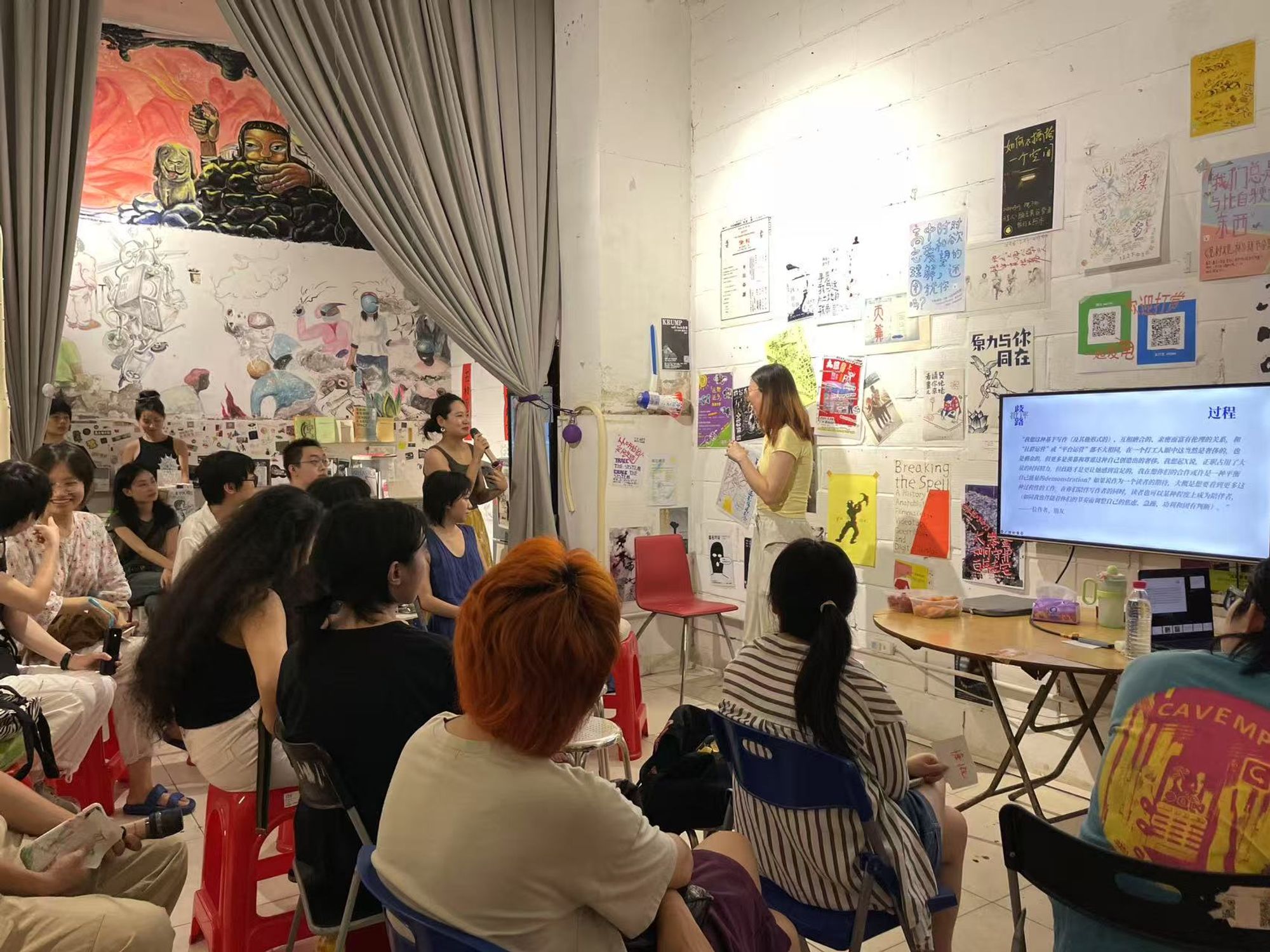
‘Amateur Editors & Qilu Criticism’ sharing at Qiantai-osf, Guangzhou, 17 July 2025. Photography by Wan Qing. Courtesy of Qilu Criticism
Annotated Editing: Qilu Criticism and the Lexicon of Editor Wannabes
Time: Thursday, 25 June, 6.30–8.30pm
Location: Asymmetry HQ
Free entry, booking essential
Join us for a gathering organised by Qilu Criticism, marking the concluding event of the Editor Wannabes’ Club. The event follows the two workshops held earlier this year at Asymmetry and will present the Lexicon of Editor Wannabes, a work-in-progress publication that has gradually taken shape through these conversations, shared readings, and editorial reflection.
Creating a space for conversations around editing, self-publishing, and writing in the field of contemporary art, the evening will start with a sharing by Qilu’s three editors, Cindy Ziyun Huang, Weitian Liu and NIE Xiaoyi, reflecting on their five-year journey as a Chinese online platform for contemporary art criticism and writing.
This will be followed by performative readings from the Lexicon of Editor Wannabes. Drawing from two interwoven sources: keywords emerging from Qilu’s own editorial practice and entries developed by participants in the Editor Wannabes’ Club workshops held at Asymmetry earlier this year. The Lexicon serves as a living repository of accumulated questions, observations, and experiences around editorial work. As a growing collective glossary, it traces the ongoing effort to find language for the often overlooked labour, affects, and contradictions of editing, while offering insight into Qilu’s working methods. Copies will be available onsite for audiences to read, annotate, and engage with.
Responding to the idea of a ‘home workshop’ that surfaced through Qilu’s self-reflection, the space will be transformed into a relaxed co-working and co-editing hub. Entries from the Lexicon, alongside open questions about editing, will activate the space and invite audiences to discuss, write, edit, and think alongside one another.
Access Information
This event takes place on the ground floor with step-free access in our multi-purpose programme space, with a fully accessible, all-gender bathroom.
Please feel free to inquire with info@asymmetryart.org if you would like to discuss any access needs. Please kindly be advised that requests should be made one week in advance of the event, and we will try our best to make accommodations subject to availability.